The Volga Delta: lotus flowers, birds and a nature reserve at work
Four islands on a nature trail, aquatic plants and a history of bird protection introduce Astrakhan Nature Reserve.
Evergreen guide · checked 24 September 2026 · 3 min read
Published 24 September 2026
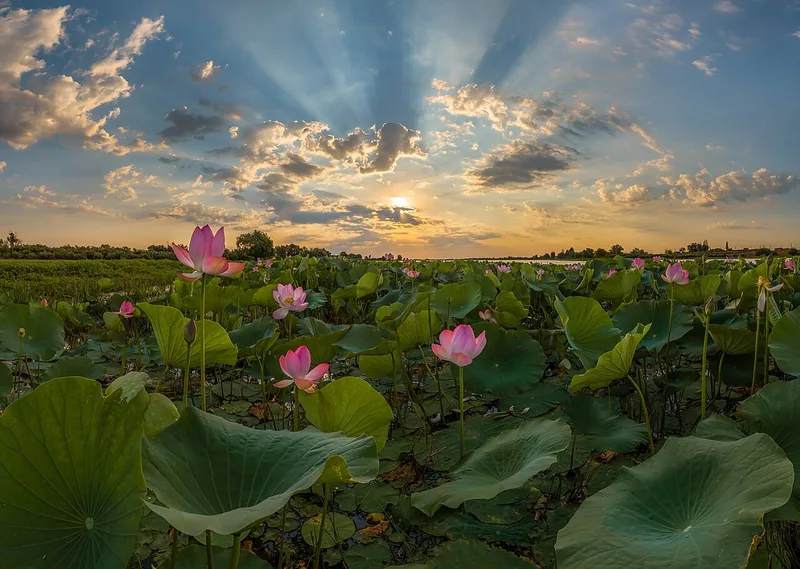

In the photograph, the Volga Delta resembles an immense garden: pink flowers rise above the water and the horizon fades into morning light. Yet a lotus field belongs to a complex living landscape. Looking beyond an individual flower reveals water, plant communities and the people who study them.
Astrakhan Nature Reserve offers this perspective through its history, scientific accounts and visitor trail. This evergreen guide helps you prepare a visit; it does not report that the lotus is flowering today.
Why protection began
The reserve regards 11 April 1919 as its founding date. Its official history connects its creation with local researchers, including Vladimir Khlebnikov. One concern was the large-scale killing of birds: demand for feathers to decorate clothing was damaging their populations.
This background gives the landscape a human dimension. Nature conservation depends on decisions, observation and daily protection. On a guided visit, ask which tasks occupy the staff today. Their answer can connect the historical account with the work of this particular reserve.
A flower and its watery surroundings
The reserve’s botanical account places lotus alongside water lilies, water chestnut and submerged aquatic plants. Willows and reed communities occupy other parts of the landscape. These represent different living conditions: some plants have floating leaves, while others stand above the water.
The science of lotus adds another perspective. In a 2022 article, botanist Natalia Litvinova explained that researchers also assess fruiting and changes at fixed observation plots. The article’s account of the effects of a 2017 flood illustrates a past vulnerability; it is not a report on conditions in 2026.
A trail across four islands
The Obretyonnaya Delta nature trail lies in the Damchik sector. The official description gives a full length of 1.7 kilometres, linking four islands by wooden boardwalks. Reedbeds alternate with willow woodland, with a viewing platform and opportunities to see lotus during flowering.
The trail description mentions herons, night herons, kingfishers and white-tailed eagles. These are potential inhabitants of the route, not guaranteed sightings. Bring binoculars and allow time to pause: watching from one position can be more rewarding than rushing to the end.
Planning your visit
Arrange the visit with the reserve and confirm access to your chosen route, the meeting point, duration and transport arrangements. If flowers are your main reason for travelling, ask about current conditions before booking. An archive photograph from a beautiful summer cannot predict a particular day.
Bring water, a hat, sun and insect protection and comfortable footwear. Follow the permitted route, leave plants undisturbed and avoid approaching birds for photographs. International visitors should ask about the guiding language and save the Russian trail name, «Обретённая дельта», to help with arrangements.
Sources & context
- Astrakhan Nature Reserve — history
- The reserve — plants, lichens and fungi
- Natalia Litvinova — lotus monitoring, 22 August 2022
- The reserve — Obretyonnaya Delta nature trail
A russia.direct editorial selection based on open sources. Checked 24 September 2026. Practical suggestions are a decision guide, not a promise of outcomes.
Editorial principles