The Curonian Spit: a landscape cared for every day
How wind, woodland, sand and human work shaped an extraordinary Baltic landscape.
Landscape, conservation and observation · 3 min read
Published 24 September 2026
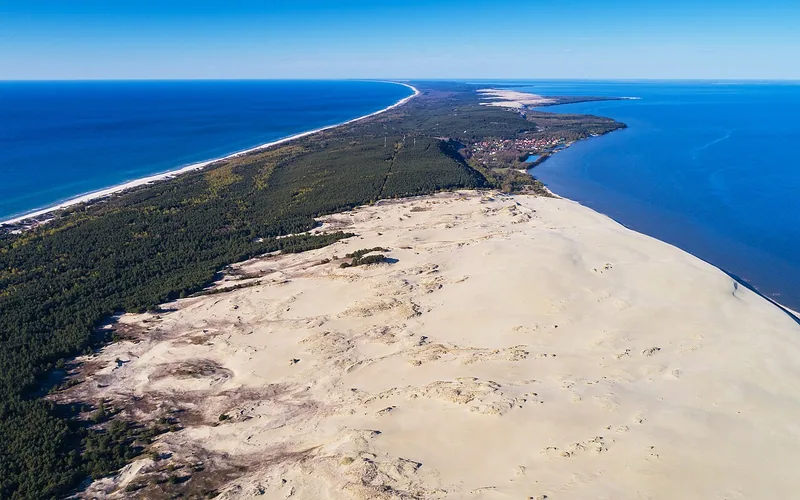

The Curonian Spit changes the scale of your attention. First comes a broad sweep of sand; then individual grasses, a trace of wind and the narrow edge of a forest. Its beauty is inseparable from movement. The landscape continues to change, and caring for it takes everyday work.
The spit is divided between Russia and Lithuania, and the World Heritage property covers both parts. This feature focuses on the national park in Kaliningrad Region. Match photographs and route information to their actual locations rather than assuming that a description of one section applies to the entire peninsula.
Why this is a cultural landscape
UNESCO describes the spit as a landscape shaped by the sea, wind and people. After woodland was cleared, moving sands threatened settlements; dune stabilisation and planting helped people continue living on the narrow peninsula. The word cultural therefore applies to the landscape itself as well as its buildings.
Try reading what you see as a set of processes. Where is sand moving? Where do plants hold it in place? Where is human work visible? A still panorama can become a history of change. A small fence or path then forms part of a much larger story about caring for a place.
The dune ridge behind the beach
The national park explains that the human-made coastal dune ridge limits the movement of beach sand inland. It does not guarantee protection against storm surges. The distinction matters: managing wind-blown sand and defending against the sea are different tasks.
Maintaining the ridge involves sand-trapping structures made from natural materials, with much of the demanding work carried out by hand. Observe these areas from designated paths. A photograph can show both the sand and the work of caring for it without requiring anyone to step onto a vulnerable slope.
A closer look from Efa Height
The official description of the Efa Height trail gives a length of 2.4 kilometres and three viewing platforms. It passes the Orekhovaya dune near Morskoye, with views of open and forest-stabilised dunes, the sea and the lagoon. Its name commemorates dune inspector Franz Efa.
Choose one view and stay with it: how does a passing cloud alter the colour of the sand, where does woodland begin, and how do the waters on either side look different? Binoculars and attentive observation can be more rewarding than collecting every viewpoint. Check the park’s current access information before travelling.
Birds add another dimension
The history of ornithological research is linked to Rossitten, now Rybachy. The national park records the opening of the station in 1901 and describes bird ringing as an important research method. Observations at one specific location can help explain movements far beyond it.
For your own exploration, note the date, weather and features of birds you observe, without approaching them for photographs. If you want to learn about the researchers’ work, check arrangements for visiting a relevant facility in advance. Scientific work and visitor programmes have different schedules; enjoying the landscape does not depend on access to research equipment.
Sources & context
- UNESCO — the Curonian Spit cultural landscape
- National park — the protective coastal dune ridge
- National park — the Efa Height trail
- National park — the history of ornithological research
A russia.direct editorial selection based on open sources. Checked 24 September 2026. Practical suggestions are a decision guide, not a promise of outcomes.
Editorial principles