The Kola Superdeep: 12 kilometres into the Earth
How the deepest borehole in the world overturned geology textbooks and what it revealed about the Earth's crust.
Cultural feature · checked 30 September 2026 · 5 min read
Published 30 September 2026
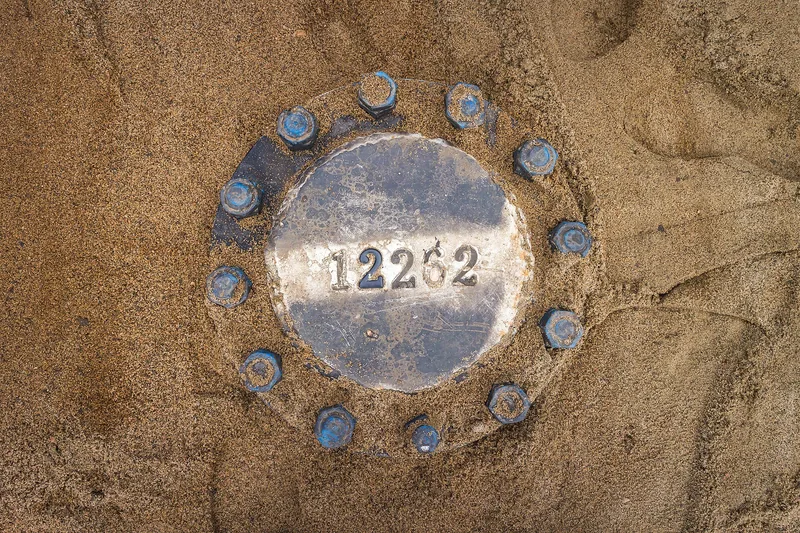

In the Pechengsky District of the Murmansk Region, about ten kilometres from the town of Zapolyarny, the remains of industrial buildings stand in the tundra. From the outside little hints at their importance, yet this is the mouth of the Kola Superdeep Borehole SG-3, the deepest hole humans have ever drilled into the Earth. It reaches 12,262 metres, while the shaft is only about 23 centimetres across. Drilling began on 24 May 1970 and continued, with interruptions, for more than two decades.
The goal was not oil or gas but pure knowledge: to see for real what the crust is made of at depths no instrument had ever reached. Until then the deep interior had been judged mainly from seismic waves and indirect calculations. The Kola Peninsula was chosen for a reason: very ancient rocks come to the surface here, so there was hope of looking into Archaean crust. The results turned out to be far more surprising than the project's authors had expected.
How the superdeep was drilled
The borehole was originally meant to reach 7 kilometres. That mark was passed within a few years: according to the journal Neftegaz.RU, the hole was 7,263 metres deep by May 1975. Once the powerful Uralmash-15000 rig was installed, the target was raised to 15 kilometres. Instead of conventional rotary drilling, where the whole string of pipes turns, the team used turbodrills: only the bit at the bottom rotated, and the string itself was assembled from light aluminium-alloy pipes.
The work was slow and exhausting. According to participants' accounts published in Nauka i Zhizn, each run advanced only 7–10 metres: about four hours of drilling and up to eighteen hours to lower and raise the string, which together with the drilling fluid weighed around 200 tonnes. A 214-millimetre coring bit cut a column of rock about 6 centimetres thick, which was brought up to the surface. By 1983 the borehole had passed the 12-kilometre mark.
An accident and a final push
After reaching 12 kilometres, drilling was paused: in 1984 the International Geological Congress was held in Moscow, and its delegates visited the rig. Soon after work resumed, on 27 September 1984, a serious accident occurred: the string broke, leaving about five kilometres of pipe in the hole. Months of efforts failed to recover it, so the team had to drill again along a bypass starting at roughly seven kilometres. Over its history the borehole acquired several such branches.
The new shaft regained the 12-kilometre depth only by 1990, when the record of 12,262 metres was set. Beyond that, heat barred the way: according to Neftegaz.RU, the temperature at the bottom reached about 212 °C instead of the predicted 120 °C or so. At such temperatures the rock behaved unpredictably and the equipment worked at its limits. Drilling stopped in 1992, and in 1995 the borehole was sealed and mothballed.
What was found in the depths
The main surprise was the absence of the expected "basalt layer". Seismic data suggested that granites gave way to basalts at about seven kilometres, but the drill never met such a boundary. Instead, below seven kilometres it entered ancient Archaean gneisses and amphibolites, heavily fractured by tectonic forces. The seismic boundary, it turned out, reflected not a change in composition but a change in the physical state of the rocks. This forced geologists to rethink the usual interpretation of seismic sections of the crust.
Water proved just as surprising. Below 9 kilometres the rocks were fractured and porous, and highly mineralised solutions circulated freely through the cracks. The drilling mud brought large amounts of hydrogen to the surface. At a depth of about 6 kilometres, microscopic plankton fossils were found in the core. There were ore finds as well: commercial copper-nickel ores at shallow depth and, roughly between 9.5 and 11 kilometres, gold mineralisation.
Legacy and legends
Since 1979 the Kola borehole has held the title of the deepest in the world and is listed in the Guinness Book of Records. Oil companies later drilled several longer, inclined wells, but none of them went as deep vertically. A huge collection of core was raised from the hole and kept in hundreds of numbered boxes. These samples and measurements still serve the science of how continental crust is built.
The borehole has also gathered its own folklore. The best-known example is the tale of a "well to hell" from whose depths screams were supposedly heard. It appeared around 1989 in a Finnish religious publication and then spread through American media, though it had nothing to do with the real work: the recorded "screams" were stitched together from sound effects. Today the rig has been dismantled and the wellhead sealed, yet curious travellers still come to the abandoned site.
Sources & context
- Nauka i Zhizn — The legendary Kola Superdeep (2002)
- Neftegaz.RU — Kola Superdeep Borehole: a space flight into the Arctic subsurface
- GoArctic — Kola Superdeep: the Arctic bottom
- Wikipedia — Kola Superdeep Borehole
- Wikipedia — Well to Hell hoax
A russia.direct editorial selection based on open sources. Checked 30 September 2026. Practical suggestions are a decision guide, not a promise of outcomes.
Editorial principles