Discover Russia through the Russian State Library
An old guidebook, manuscript collections and digital resources offer a way into the country’s reading culture from anywhere.
Library guide · checked 24 September 2026 · 3 min read
Published 24 September 2026
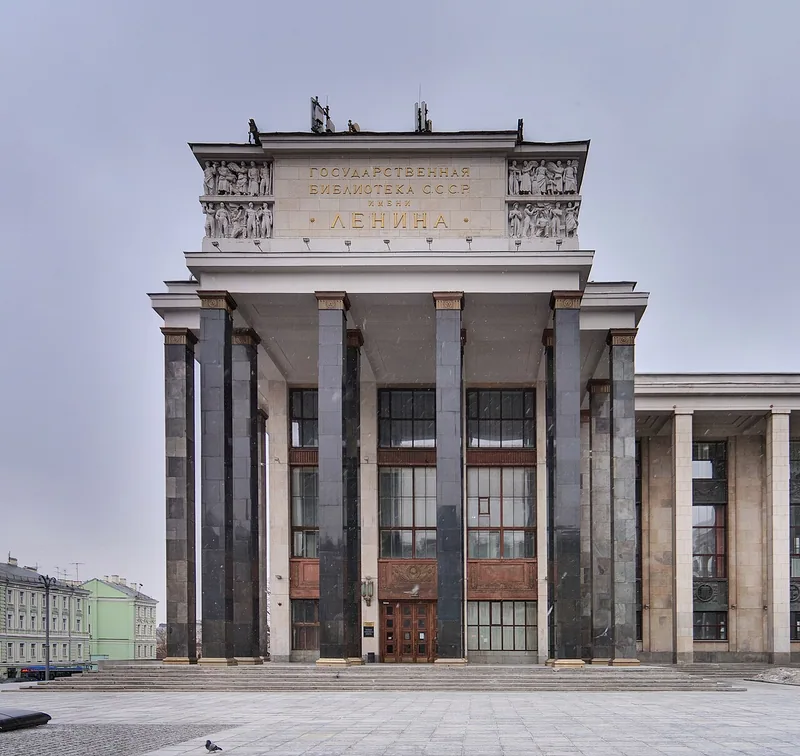

A large library becomes easier to approach with a small question. How was a city described a century ago? What did the first edition of a familiar book look like? What can an old map reveal? A question turns an immense collection into a personal route for discovery.
You can begin exploring the Russian State Library online. Its digital holdings include books, manuscripts, newspapers, maps and other documents. However, a catalogue record and permission to read the full text from home are different things: check the access conditions attached to the item you choose.
Where the library came from
The library’s history is connected with the Rumyantsev Museum. In 1862, a combined public and Rumyantsev museum institution was established in Moscow. The manuscript department’s historical account describes the support of collectors and donors in building its holdings.
Individual objects offer another way into that history. The same account records the arrival, in late 1876, of the Arkhangelsk Gospel dated 1092. Centuries separate the making of the manuscript from its entry into the collection. An object’s date and its acquisition date describe different parts of its biography.
A first search: a guidebook from 1923
For a concrete starting point, open the catalogue record for the State Rumyantsev Museum’s Guidebook, published by L. D. Frenkel in Moscow and Petersburg in 1923. It supplies a bibliographic description and a reading link; the document is marked as freely accessible.
Before reading, compare the title, publication year and information about the record’s component parts. Then bring one question to the book: how, for example, do its authors organise an introduction to the institution? Save the catalogue link with the relevant page number so you can return to the same source and share it.
What a digital copy can reveal
Treat a scan as an image of an object. Look at the title page, typeface, captions and the relationship between text and illustrations. If using machine-recognised text, compare important names and numbers with the scanned page: a single mistaken letter can change a search.
Avoid transferring an old description directly into a present-day travel guide. A historical book records its own period; addresses, names and judgements may have changed. Three fields make useful research notes: what the source says, the page reference, and the question that needs checking elsewhere.
Reading online and visiting in person
The library explains that its full digital collection is available in its reading rooms, while remote access to some documents is restricted. Check the record for your chosen item first. For an in-person visit, separately consult current registration, ordering and reading-room arrangements.
English-speaking readers may find it helpful to save Russian spellings of names and titles alongside translations, making searches easier to repeat. Do not try to cover everything at once. One document read carefully, a few precise notes and a new question already make a worthwhile encounter with the library and the country’s culture.
Sources & context
- Russian State Library — digital holdings and access
- Russian State Library — the manuscript department’s Moscow history
- Russian State Library — Rumyantsev Museum guidebook, 1923
A russia.direct editorial selection based on open sources. Checked 24 September 2026. Practical suggestions are a decision guide, not a promise of outcomes.
Editorial principles