Yuri Gagarin: from Klushino to space
How the village of Klushino and the small town of Gzhatsk raised the first person in space, and what the museums of the town of Gagarin keep.
Cultural feature · checked 5 October 2026 · 5 min read
Published 5 October 2026
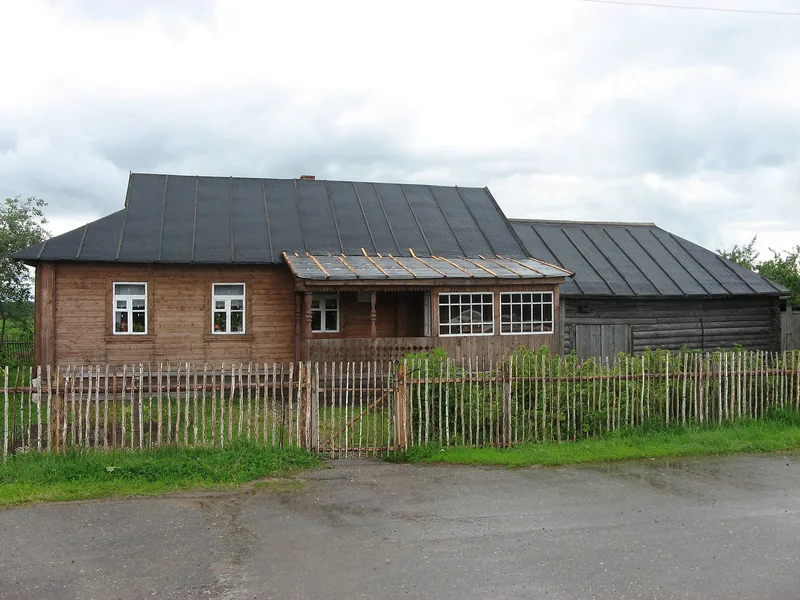

On the morning of 12 April 1961 a human being flew around the Earth for the first time. His name was Yuri Gagarin, he was 27, and only about ten years earlier he had been a pupil at an ordinary school in Gzhatsk, a small town in the east of the Smolensk Region. Today the town bears his name. And nearby, in the village of Klushino, a house-museum stands on the very spot where the future cosmonaut spent his early childhood and where his family lived.
Gagarin's story is usually told as the story of a single flight, but it begins much earlier, with a village house, a family of collective farm workers and a hard childhood. To see in him not only a poster hero but an ordinary boy from the Smolensk countryside, it is worth visiting the places where he grew up. The Gagarin museums carefully preserve this part of his life: modest rooms and everyday objects say as much about the man as any spacecraft.
Childhood in Klushino
Yuri Alekseyevich Gagarin was born on 9 March 1934 in the village of Klushino. His father, Aleksey Ivanovich, worked as a carpenter on the collective farm, and his mother, Anna Timofeyevna, on its dairy farm. The family lived in a wooden house built in 1933 and led an ordinary peasant life in which everyone had their share of household chores. This is where the future cosmonaut spent his first years, and this is where people come today to begin getting to know him from the very start.
His childhood was not easy. According to the museum, from October 1941 to March 1943, during the occupation, the family lived for about a year and a half in a dugout; a reconstruction of it can be seen in the yard of the House-Museum of Gagarin's School Years in the town of Gagarin. In Klushino, in 1971, the House-Museum of the Gagarin Family was built on the site where the Gagarins lived from 1933 to 1947. It recreates a peasant home of the 1930s and covers about 69 square metres.
Gzhatsk and the house that moved to town
After the war the family moved to Gzhatsk, an old town on the Gzhat River. Its history as a settlement by a river landing began in the early eighteenth century by decree of Peter the Great, and it received town status in 1776. In 1947 Aleksey Ivanovich brought his wooden house from Klushino to Gzhatsk as well and set it up on Leningradskaya Street, which now bears Gagarin's name. So the house of Yuri's childhood moved along with the family.
Today it is the House-Museum of Yuri Gagarin's School Years. Its interior recreates the home as it was in 1949, when Yuri was a schoolboy in Gzhatsk. The small house, just 54 square metres, shows clearly how simply and modestly the family lived in the post-war years. Details like these help you picture a teenager who was soon to leave his home town to study and work, and later to rise higher than anyone had before him.
The road to 12 April
In 1950, aged sixteen, Gagarin left for Lyubertsy near Moscow and became an apprentice foundryman at a factory. Then came studies at an industrial technical school in Saratov, and alongside them lessons at the local flying club, where he learned to fly on training aircraft, including the Yak-18. In 1955 he was accepted into the military pilots' school in Orenburg, and in November 1957 he was commissioned as a lieutenant and became a military pilot.
On 12 April 1961, at 9:07 Moscow time, the Vostok spacecraft with Gagarin on board lifted off from Baikonur. At the moment of launch he spoke his famous words, Poyekhali, or Off we go. The spacecraft made one orbit of the Earth; officially the flight lasted 108 minutes, although later refined figures put it at about 106. At a height of around seven kilometres the cosmonaut ejected and came down by parachute in the Saratov Region, roughly 26 kilometres south-west of Engels.
A town bearing his name, and its museum
Gagarin died on 27 March 1968 during a training flight, and that same year Gzhatsk was renamed Gagarin. The family's ties to their home region continued: in 1961 the government of the RSFSR gave the cosmonaut's parents a new house, and his mother, Anna Timofeyevna, spent her last years in the Cosmonauts' House, built in 1983. She died in June 1984. Today the Cosmonauts' House is also part of the museum complex.
The Yuri Gagarin Memorial Museum formally opened on 5 April 1970. In January 2022 the united museum was granted the status of a museum-reserve; according to the museum, on 1 January 2022 its collections held more than 83,000 items. The complex includes a local history museum, the Museum of the First Flight, house-museums in Gagarin and Klushino, and the Cosmos Conquerors Park. It is best to check opening hours and programmes on the museum's website before you travel.
Sources & context
- Yuri Gagarin Museum-Reserve — about the museum
- Yuri Gagarin Museum-Reserve — House-Museum of Gagarin's School Years
- Wikipedia — Yuri Gagarin
- Wikipedia — Vostok 1
- Wikipedia — Gagarin, Smolensk Oblast
A russia.direct editorial selection based on open sources. Checked 5 October 2026. Practical suggestions are a decision guide, not a promise of outcomes.
Editorial principles