Elektrichkas: how to ride Russia's suburban trains
Platforms, tickets, turnstiles, zones and express trains: what you need to know to use the elektrichka with confidence, including on the Moscow Central Diameters.
Practical feature · checked 5 October 2026 · 5 min read
Published 5 October 2026
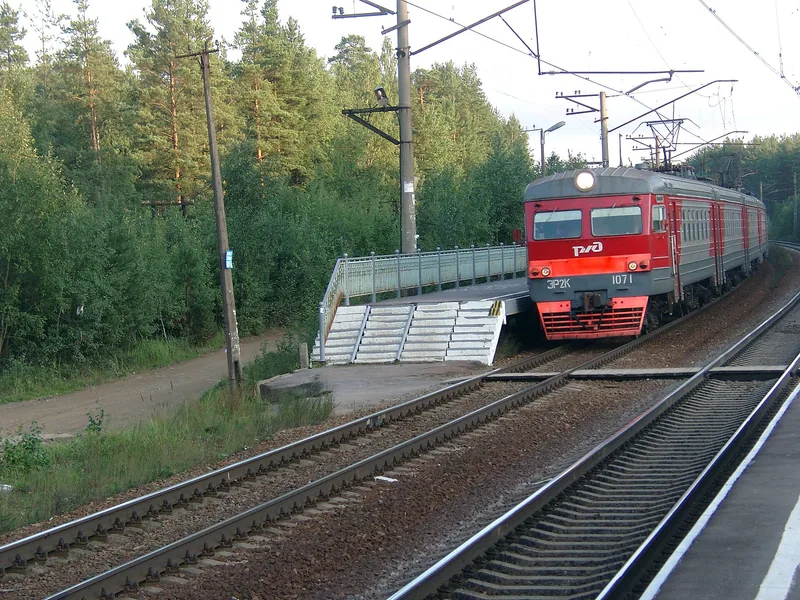

The elektrichka, an electric suburban train, links almost every Russian city with a railway to its suburbs and neighbouring towns. The first such line in the Soviet Union opened on 6 July 1926 between Baku and Sabunchi, and today, according to open sources, around four thousand suburban trains run on the Russian Railways network every day. People take them to work and school, to their dachas, mushroom picking, or simply out of town for the weekend.
A trip by elektrichka is simpler than a journey on a long-distance train, but it has its own subtleties, and they vary noticeably from region to region. Fares are approved by regional authorities, and suburban trains in different parts of the country are run by different carriers with their own ticket offices, apps and rules. So it is worth checking timetables and travel conditions on the website or app of the carrier that operates in your region.
Stations and platforms
Elektrichkas stop not only at terminals and large stations but also at small halts, simple platforms that sometimes stand in the middle of a forest or next to dacha settlements; some of them are only used in season. Some have ticket offices and shelters, others just a sign with the name. Before you travel, check the timetable to see whether your train actually stops at your platform: express trains pass many halts without stopping.
At small platforms there may be no ticket office or machine at all. In that case the passenger carriage rules expressly allow you to board without a ticket if the station has no working ticket offices or self-service terminals. The ticket is then issued on the train or on arrival at your destination station, with no extra charge for issuing it. If the station's ticket office or machine is working, however, you need to buy a ticket before boarding.
Tickets: office, machine, app
Elektrichka tickets are sold at station ticket offices and self-service terminals, and in many regions also through the mobile apps of carriers and ticketing services. A single ticket is valid for one trip in one direction during the days shown on it, plus one hour of the following day. Regular travellers can use season tickets: valid every day, on working days only, or for a set number of trips.
Activation depends on the carrier and app. In Yandex Elektrichki, a TsPPK or MTPPK ticket must be activated at the departure station before boarding: scan the validator’s QR code to obtain an entry barcode. Other carriers may provide a usable code immediately. Keep the ticket until you exit your destination station. Tickets bought in this app cannot be transferred to another device.
Zones and express trains
The carriage rules allow several kinds of suburban fares: fixed, zonal, per-kilometre and combined, and regional authorities choose among them taking into account the category of train, how the ticket is bought and the time of travel. Under a zonal fare the route is divided into sections, and the price depends on how many zones you cross. So when buying a ticket, give your exact destination: a ticket to a nearer station will not cover a longer trip.
As well as ordinary elektrichkas, express trains run on major routes, above all from Moscow and St Petersburg. They make fewer stops, travel faster and usually have more comfortable cars, but their tickets cost more. Since the fare can depend on the category of train, a ticket for an ordinary elektrichka is not always valid on an express. Before you travel, check the train type in the timetable and choose the right ticket at the office or in the app.
The MCD in Moscow
In Moscow and the surrounding region, some suburban lines have become the Moscow Central Diameters, a hybrid of urban and suburban transport running on Moscow Railway tracks. The first two diameters opened on 21 November 2019, and more lines have been added since. Trains run right across the city from one suburb to another, and fare payment is integrated with the metro. The main train on the diameters is the Ivolga, and they are operated by the Central Suburban Passenger Company.
MCD routes are divided into fare zones: Central, Suburban and Distant. You can pay with a Troika card, a bank card or a smartphone, tapping the turnstile or validator both on entering and on leaving a station. When paying with Troika, you get a free transfer to the metro and the Moscow Central Circle within 90 minutes. Payment rules change from time to time, so it is best to check the current conditions on Moscow's official transport resources.
Sources & context
- ConsultantPlus — Ministry of Transport Order No. 352: ticketing for long-distance and suburban trains
- Official portal of the Moscow Mayor and Government — How fares will be paid on the MCD
- Yandex Help — How to use an electronic suburban train ticket
- Wikipedia — Elektrichka
- Wikipedia — Moscow Central Diameters
A russia.direct editorial selection based on open sources. Checked 5 October 2026. Practical suggestions are a decision guide, not a promise of outcomes.
Editorial principles