Kalitki and kitchen memory: meeting Karelia through food
Family recipes, fieldwork and several languages reveal a region through the people who cook there.
Cultural feature · checked 24 September 2026 · 3 min read
Published 24 September 2026
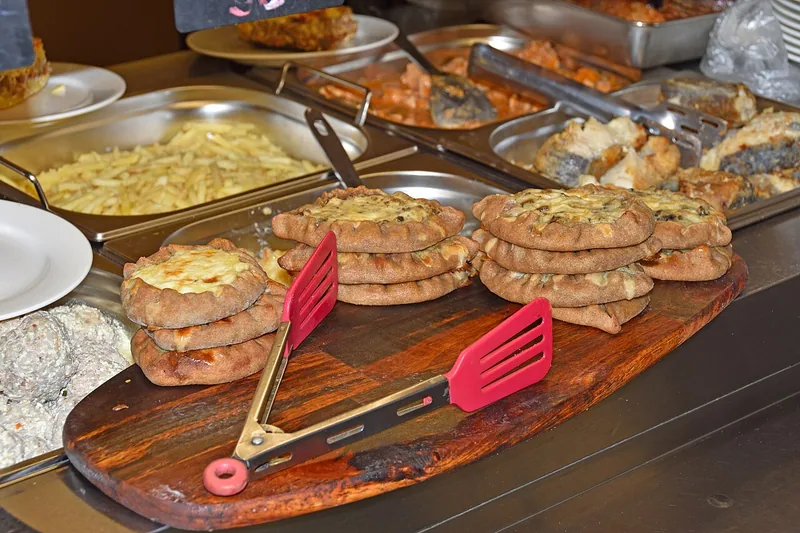

An introduction to regional food can begin with a simple question: who taught you to make this? The conversation changes immediately. Instead of a checklist of dishes, you hear names, family habits and ways of passing on knowledge. In Karelia, kalitki can provide just such an opening.
Our photograph shows open pastries at a café in Sortavala. Their recognisable shape leads to a larger subject: how everyday cooking becomes cultural memory, and how to keep the voices of local people at the centre of that story.
Several culinary voices in one region
The Kizhi Museum’s digital library offers Anna Ankhimova’s Cuisine of the Peoples of Karelia, published in Petrozavodsk in 2026. It covers Karelian, Vepsian and Russian food. Karelian and Vepsian recipes appear in the relevant languages alongside Russian; contemporary local cooking is included too.
Treat the word traditional as an invitation to ask about provenance. Who contributed a recipe, where did they learn it, and what changed in their household? These questions make room for differences instead of reducing a region to a single fixed menu.
From a household recipe to a record
In its report on the book’s presentation, dated 8 September 2026, the museum describes ten expeditions, fifty informants and more than 120 collected recipes. This is practical research: travelling, listening, recording and comparing different versions.
A collection like this allows readers to return to the source. If your family has a recipe notebook, consider recording the cook’s name and explanations alongside the ingredients. A photograph of the page and a memory of the occasion can sometimes convey more than a neatly rewritten set of instructions.
Watch what the hands do
The museum’s video archive includes Ankhimova’s demonstrations of kalitki, vendace, barley porridge and other dishes. Its island cooking programmes have used the Berezkina House, a wooden building dating from 1925 and moved from Krasnaya Selga. This describes the programme’s background; check individual sessions separately.
Try watching a demonstration twice: first from beginning to end, then concentrating on the shaping. Notice how the cook holds the dough and works along its edge. We do not infer quantities from a photograph; use a published recipe and its author’s explanation when cooking.
Questions to take on your journey
At a café, ask about the ingredients and filling. At a workshop, ask where that particular version comes from. If you need allergy information, ask directly: a dish’s name does not specify every ingredient. International visitors may find it useful to save the Cyrillic name, калитки, alongside kalitki.
Avoid turning a conversation into a test of authenticity. A family version and a modern interpretation may be interesting for different reasons. Record what you tasted and who told you about it. You will bring home a small story about a person and a place as well as a photograph of your plate.
Sources & context
- Kizhi Museum — Cuisine of the Peoples of Karelia, 2026
- Kizhi Museum — book presentation, 8 September 2026
- Kizhi Museum — Anna Ankhimova’s cooking demonstrations
A russia.direct editorial selection based on open sources. Checked 24 September 2026. Practical suggestions are a decision guide, not a promise of outcomes.
Editorial principles