Kizhi: timber, craftsmanship and the art of conservation
Behind the wooden churches stand generations of carpenters, researchers and conservators.
Landscapes, history and everyday life · 3 min read
Published 24 September 2026
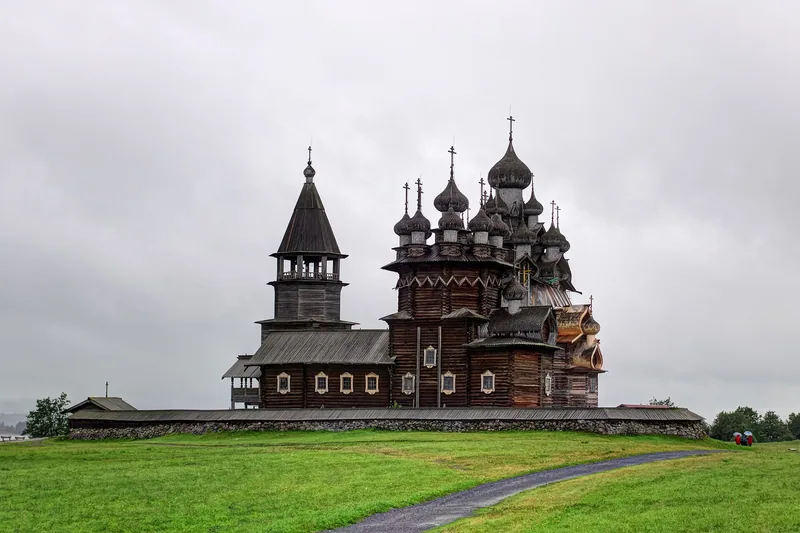

Kizhi is instantly recognisable as a silhouette. A closer encounter begins when counting domes gives way to noticing the material. How does a log become part of a large structure? What exactly does a conservator preserve: a shape, old timber or knowledge of how something was made?
No single answer is enough. Architecture, landscape and human skill belong to the same story. Read it gradually: take in the ensemble, move closer to a detail, and then explore the techniques that make the whole possible.
Understanding the ensemble
Kizhi Pogost stands on an island in Lake Onega. Its World Heritage ensemble includes two eighteenth-century wooden churches and a nineteenth-century bell tower. The pogost and the museum-reserve’s wider collection are related, but they are not identical.
The Church of the Transfiguration has 22 domes. To understand its composition, also notice how large volumes lead into smaller ones and how the silhouette appears from the water. The spaces between the buildings help bring the ensemble together.
A legend is not a construction specification
The museum presents the familiar description “without a single nail” as a legend. An appealing phrase should not become a technical statement about every joint or every later repair. A building’s history is more complicated than a memorable slogan.
When exploring independently, separate documented information, local stories and personal impressions. All three can enrich an account, provided readers can tell where each claim comes from. That distinction allows curiosity and accuracy to work together.
Preserving more than a building
The museum’s conservation publications describe its Carpentry Centre and the transmission of traditional skills. Work on the Transfiguration Church involved lifting sections and repairing the log structure in stages, a method discussed in the museum’s technical accounts.
It helps to imagine conservation as a sequence of decisions: investigate the condition, justify an intervention and record what was done. Our interpretation is that caring for heritage requires both practical skill and the ability to explain why a particular approach was chosen.
Questions that lead to a closer look
On a guided visit, ask where you are seeing historic material and where you are seeing the result of later restoration. Another useful question is how a specialist recognises the condition of a piece of timber.
The museum’s digital library and monument descriptions let you continue after the visit. Our archive photograph is an invitation to explore that history, not evidence of the present condition of every architectural element. Looking carefully is the beginning of a longer conversation.
Sources & context
- UNESCO — Kizhi Pogost
- Kizhi Museum — conservation methods, 2012 paper
- Kizhi Museum — Church of the Transfiguration
A russia.direct editorial selection based on open sources. Checked 24 September 2026. Practical suggestions are a decision guide, not a promise of outcomes.
Editorial principles