The Kolomna kalach: a craft you can taste
A working bakery offers a way into the history of bread, the shape of a kalach and the skills behind it.
Cultural guide · checked 24 September 2026 · 3 min read
Published 24 September 2026
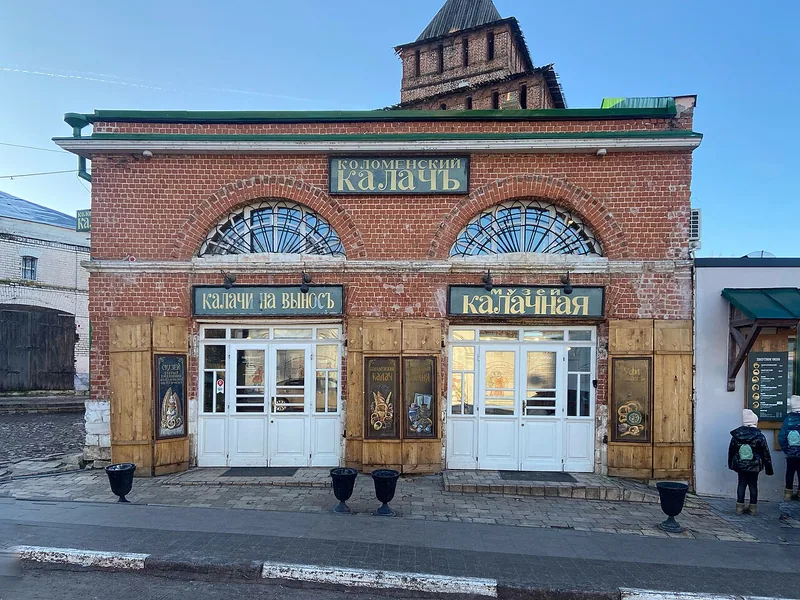

You may encounter the word kalach before you ever hold one. In Kolomna, you can move from the name to the object: examine the bread’s shape, watch a baker at work and discover why reconstructing a recipe takes more than a list of ingredients.
The Kalachnaya Museum opened in 2013 and belongs to the Kolomensky Posad cultural cluster. Its own history describes preliminary research supported by the Vladimir Potanin Foundation and credits the idea to Natalia Nikitina. It is an example of local heritage research becoming cultural work in a present-day town.
Where the museum begins
Kalachnaya occupies a former wholesale shop at 14 Zaytseva Street, beside the Pyatnitsky Gates. The museum identifies parts dating from the late eighteenth or early nineteenth century and from the middle of the nineteenth. A former trading space now uses baking to tell a story about a trading town.
Before entering, notice how the shop relates to the street and gates. Imagine a customer approaching, pausing and looking around. This is our suggestion for exploring the setting, not a reconstruction of a particular market day: architecture helps us frame questions, while documents help answer them.
Why the shape matters
The museum describes three recognisable parts of a kalach: the handle, lip and belly. The lip is a cut and folded section of the fuller belly. Different thicknesses let you compare crust and crumb within one piece of bread. Look at the whole shape before breaking off a piece.
The museum’s account connects the result with flour blending, dough preparation and the oven. A useful question for visitors is how seemingly similar pieces of dough produce different bread. Ask a baker how they judge readiness and which movement is hardest to explain in words.
Preserving a sequence of actions
The museum identifies the baking process, reconstructed from archival material, as its principal exhibit. A two-hearth oven was recreated for it. History is presented through actions: preparing, shaping, waiting for the right condition and baking. The finished loaf is the visible outcome of that sequence.
This makes intangible heritage easier to understand. A product photograph alone cannot teach the work; skill, order and the maker’s decisions matter. During a workshop, follow one stage especially closely, then try describing it in your own words afterwards.
Choose your way in
The current programme lists a theatrical Kolomna Kalach visit with tasting and a separate hands-on kalach-making workshop. These are different formats. Advance booking is required, according to the museum; check availability, age guidance and the contents of the specific programme before travelling.
For an English-speaking group, ask about the language in advance. If ingredients matter, request the full composition, including anything served alongside the bread. Leave time afterwards for the surrounding streets: the kalach is interesting both in itself and as a reason to look more closely at the town where the craft has found a new life.
Sources & context
- Kalachnaya Museum — the project and its founders
- Kalachnaya Museum — the building’s history
- Kalachnaya Museum — shape and baking technique
- Kalachnaya Museum — reconstructing the baking process
- Kalachnaya Museum — programmes and advance booking
A russia.direct editorial selection based on open sources. Checked 24 September 2026. Practical suggestions are a decision guide, not a promise of outcomes.
Editorial principles