Veliky Novgorod: a city where the past has a voice
The kremlin, frescoes and birch-bark letters bring a medieval city into human focus.
Landscapes, history and everyday life · 3 min read
Published 24 September 2026
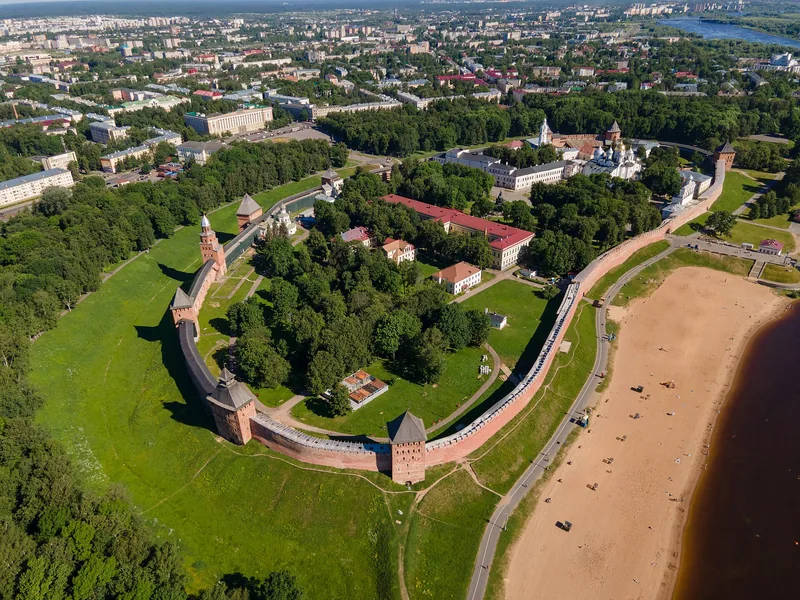

A city’s history can be told through rulers and major dates. Novgorod offers another route into the past: a letter, an everyday object or the trace of a writing exercise. Such things help us imagine a person who once lived beside the monument.
For a rewarding introduction, combine two scales: a city panorama and a small museum object. One explains the setting; the other gives it everyday life. A familiar historic centre then becomes more than a list of required stops.
Monuments within a connected city
UNESCO relates Novgorod’s history to trade routes linking northern Europe, Central Asia and Byzantium. Its protected ensemble includes monuments both in the city and its surroundings, among them Saint Sophia Cathedral and churches with outstanding wall paintings.
Start with a map: locate the Volkhov River, the kremlin and the opposite bank. Then choose a single monument for a closer look. This also avoids confusing Veliky Novgorod with Nizhny Novgorod, a different city with a history of its own.
Birch bark brings individual lives into view
Novgorod Museum presents birch-bark documents alongside jewellery, footwear, tools and objects associated with learning. Its description of the exhibition “I Sent You Birch Bark” includes letters by Onfim, a boy who lived in the thirteenth century.
That combination invites everyday questions. Why was a message needed? Who could read it? What does an object mean outside our familiar writing culture? Use the museum’s explanation to distinguish what researchers establish from what a visitor may imagine.
Why fragile material survived
UNESCO describes Novgorod’s waterlogged, oxygen-poor cultural layers, which preserve organic material. Archaeological context connects an individual discovery with the layers and objects around it. The circumstances of a find matter as much as its striking appearance.
A location, a date and careful interpretation help turn an object into historical evidence. The scholarly online corpus of birch-bark documents provides a way to continue exploring the texts and the research behind them after a museum visit.
Build a small museum walk of your own
Choose three different kinds of object: a building, an image and a written document. For each, note its maker if known, an approximate date, and what the available evidence supports with confidence. The exercise works for a return visit as well as a first encounter.
English-speaking readers may find it helpful to save the Russian names: Великий Новгород, Волхов and Софийский собор. Russian-speaking readers can try describing a familiar monument without a textbook phrase. In either language, a personal question makes the place easier to remember.
Sources & context
- UNESCO — Historic Monuments of Novgorod
- Novgorod Museum — birch-bark documents and everyday objects
- Scholarly corpus of Old Russian birch-bark documents
A russia.direct editorial selection based on open sources. Checked 24 September 2026. Practical suggestions are a decision guide, not a promise of outcomes.
Editorial principles