Tea, samovars and conversation: discovering everyday culture
How an everyday object connects craftsmanship, family memory and time shared around a table.
Landscapes, history and everyday life · 3 min read
Published 24 September 2026
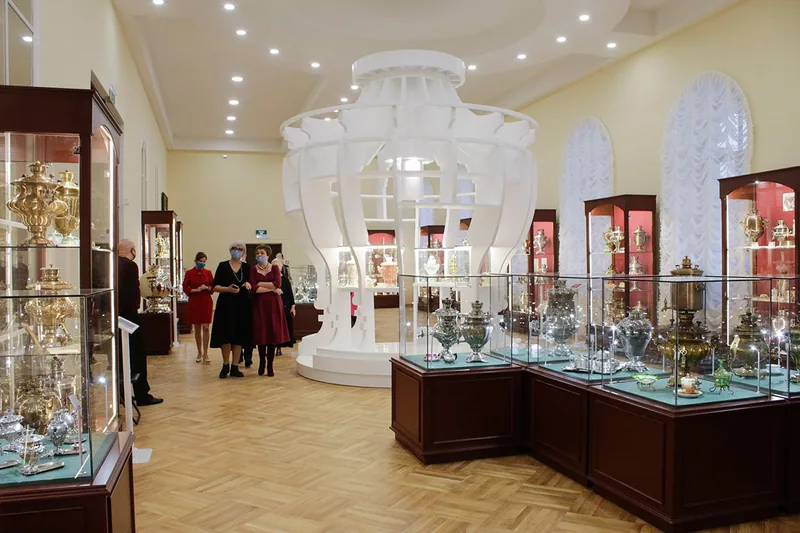

A country’s culture can be explored outside its grand public rooms. An object once placed at the centre of a home can be an equally useful starting point. A samovar brings together craftsmanship, domestic surroundings and the habits through which people spend time together.
No single object represents every family or period. Some readers associate a samovar with personal memories; others know it only from a museum. Both starting points can lead to thoughtful questions about how people arrange everyday life.
Why begin in Tula?
The Tula Samovars Museum opened in 1990. Its display follows local manufacture from the late eighteenth century and pays particular attention to the Batashev, Shemarin and Fomin family businesses.
The collection includes varied shapes and sizes, including a samovar from the Lisitsyn workshop. Differences between objects suggest a story of their own: who an item was intended for, how much water was needed, and how practical requirements influenced its appearance.
Look at an object as the work of a maker
Choose one piece and mentally separate its body, handles, lid, tap and supports. Ask where the form serves a function and where decoration becomes important. This is our suggestion for looking slowly, not an instruction for making or operating a samovar.
Then read the label to check material, place of manufacture and date. Two similar-looking pieces need not share a maker. Museum attribution supplies information that a photograph alone cannot establish, and sometimes changes the story you initially imagined.
Family memories benefit from detail
If an old piece of tableware or a photograph survives at home, record the account of someone who remembers it. Specific questions help: where did it come from, who used it, where was it kept, and when did it stop being brought out?
Keep recollection separate from a verified date. “That is what our family did” is valuable precisely as an individual history. It becomes more accurate when it is not turned into a statement about what everybody in Russia supposedly did.
Sharing a table today
When entering an unfamiliar home, attentiveness matters: ask about your hosts’ preferences, explain dietary restrictions and avoid treating one way of serving something as the only correct method. These are editorial suggestions for considerate conversation, not a national rulebook.
Curiosity about a country can begin with a question about a favourite family flavour. Our photograph shows the museum display in Tula. Alongside the portal’s story about pelmeni, it invites readers to treat food and hospitality as a living conversation rather than a fixed set of stereotypes.
Sources & context
A russia.direct editorial selection based on open sources. Checked 24 September 2026. Practical suggestions are a decision guide, not a promise of outcomes.
Editorial principles