The Tretyakov Gallery: finding your way into Russian art
A collector’s story and a practical way to see more in a painting than its familiar title.
Landscapes, history and everyday life · 3 min read
Published 24 September 2026
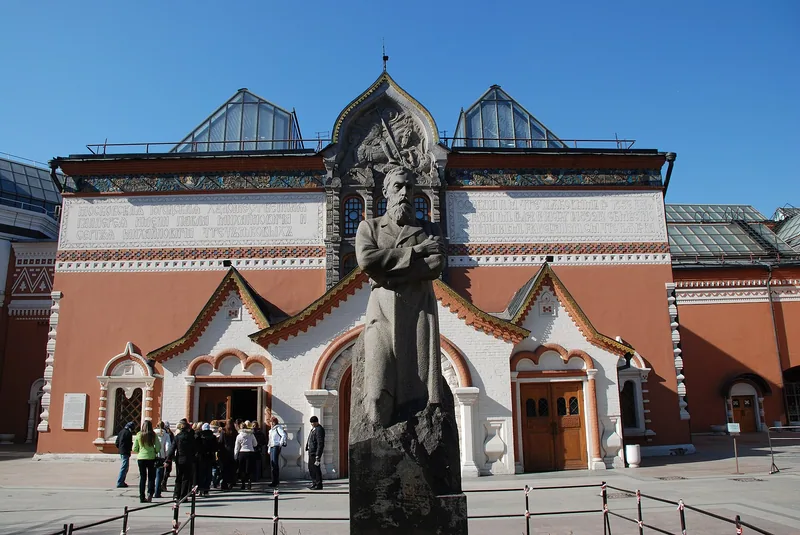

A celebrated painting can feel familiar before you encounter it: you have seen it in a textbook, on a postcard or online. Recognising the subject is only a beginning. In a museum, scale, colour relationships and small details can become visible in a different way.
The Tretyakov Gallery also connects art with the history of individual initiative. A collection begins with choices made by particular people, then becomes a place in which each visitor can build a route of their own.
The person behind the name
The gallery traces its beginnings to 1856, when Pavel Tretyakov acquired a painting by Vasily Khudyakov. His family had bought the house in Lavrushinsky Lane in 1851; rooms for paintings were added as the collection grew.
That sequence presents the museum as the result of sustained work, rather than something that appeared fully formed. It invites a wider question: how does a private interest become a public resource, and which decisions help make that change possible?
Three questions to ask a painting
Our suggested starting point is three questions. Where does your eye go first? Which detail changes your impression when you look again? What remains unclear after reading the label? No particular emotional response is required.
First describe what is visible without judging it: a pale area, a dark figure, empty space or a repeated colour. Then move towards interpretation. Separating these stages helps avoid presenting a personal guess about meaning as the artist’s documented intention.
Russian art extends beyond a familiar landscape
For further exploration, compare your interests with the Russian Museum’s collection categories. They include early Russian art, painting, decorative and folk art, photography and newer artistic practices. Different materials invite different kinds of attention.
This is not a list of the Tretyakov Gallery’s rooms. It is a suggestion for broadening an encounter with Russian art. A painting, a textile, an everyday object and a photograph each pose different questions; material and use can matter as much as subject.
A visit does not need to be a marathon
Choose a manageable theme: one artist, a genre or a recurring motif. Leave time to return to two or three works. Afterwards, note which detail you remembered without prompting and why you wanted to see it again.
Check the gallery’s official website for its current venues, displays and visiting arrangements. At home, begin with the collection’s history and our feature on Morning in a Pine Forest. The complete Russian and English editions let you follow the same path in either language.
Sources & context
A russia.direct editorial selection based on open sources. Checked 24 September 2026. Practical suggestions are a decision guide, not a promise of outcomes.
Editorial principles