Buryat buuza: a dough yurt with broth inside
Why buuza have an opening on top, what goes into the filling, how to eat them properly and where Sagaalgan comes in.
Cultural feature · checked 30 September 2026 · 4 min read
Published 30 September 2026
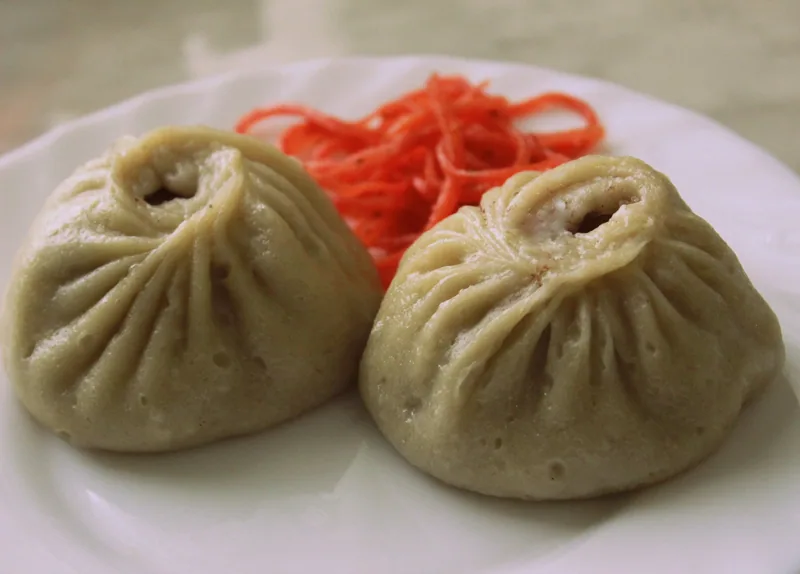

Buuza is the Buryat name for a dish that Russians usually call pozy. They are steamed parcels of dough with a meat filling, pleated so that a small opening is left on top. In Buryatia they are made at home and served in cafés, shaped by the whole family and always present on a festive table. For many people in the republic they are the taste of home and childhood, and for visitors the first thing worth trying on arrival.
Buuza have close relatives in neighbouring cuisines: they are considered a variant of Chinese baozi, and in Mongolia a similar dish is called buuz. But in Buryatia they have developed their own habits, from the way they are pleated to a particular way of eating that visitors will want to know in advance. This piece looks at those habits, from the shape and filling to the festive table.
A shape with an opening on top
The hallmark of a buuza is the ring of pleats around a small opening at the crown. The practical reason is clear: steam escapes through the hole, so the dough does not burst while cooking. Many descriptions compare the shape to a yurt with its smoke hole at the top. The shape is not only handsome but practical: it is easy to hold in the hand without spilling what is inside.
It is often said that a proper buuza should have 33 pleats. There are different interpretations of the number, including ones linked to Buddhist tradition, and sources retell them in different ways. For a guest, what matters more is that careful pleating keeps in the juices that make buuza so loved. Pleating takes skill, and in families it is usually learned gradually, by helping older relatives at a shared table.
Meat only
The filling is meat: chopped meat with onion, salt and pepper. The meat used to be chopped by hand; today mutton, beef and pork are used in various combinations, sometimes with a little fat, wild onion or garlic. Tradition knows no vegetable buuza. Because the ingredients are so simple, the quality of the meat and the right balance with onion matter all the more.
Buuza are steamed, usually for about 15 to 20 minutes, in special steamer pots that in Buryatia are called poznitsy. In that time the meat releases its juices, and a hot broth gathers inside each buuza. Buuza are served straight away, while hot, before the broth can soak into the dough.
How to eat buuza
Buuza are eaten with the hands, no fork. You hold one by the edge, take a careful bite from the side without turning it over, drink the broth, and only then eat the rest. That way the juice does not spill onto the plate, and the first sip is the best of all. The order is easy to remember, and after the second or third buuza it becomes a habit.
A tip for newcomers: do not rush, and let the buuza cool a little, because the broth inside is very hot. If you are a guest in someone's home, watch your hosts and follow their lead: you will avoid burning yourself and show respect for the cuisine. Hosts are usually glad to show how to hold a buuza, and it is a good way to start a conversation at the table.
Sagaalgan and Ulan-Ude
Sagaalgan, or the White Month, is the lunar New Year, celebrated in Buryatia as well as in Kalmykia and Tuva. The name comes from the word sagaan, white, so the table carries plenty of white food, meaning dairy products. Buuza are among the festival's main dishes: families make them together, and they stand for abundance and family unity. The date changes every year because it follows the lunar calendar, usually falling in late winter or early spring.
In Ulan-Ude buuza are part of city life all year round. The city hosts speed-pleating contests and the Buuzyn Bayar festival, and restaurants compete for the Golden Buuza award. Dates change, so it is worth checking official city and republic resources for current events. If you are in the city for the first time, buuza are a simple and warming introduction to Buryat cuisine.
Sources & context
- Living Heritage — Buuza (pozy), Republic of Buryatia
- Gastronom.ru — Buryat buuza: how they are made and eaten
- Argumenty i Fakty — Three traditional dishes for Sagaalgan
- Wikipedia — Buuz
- Wikipedia — Tsagaan Sar (Sagaalgan)
A russia.direct editorial selection based on open sources. Checked 30 September 2026. Practical suggestions are a decision guide, not a promise of outcomes.
Editorial principles