Your first winter in a big city: how to prepare
Layered clothing, footwear with good grip, short days, the heating season, ice and transport in snowfall: practical advice.
Practical guide · checked 30 September 2026 · 5 min read
Published 30 September 2026
.jpg)
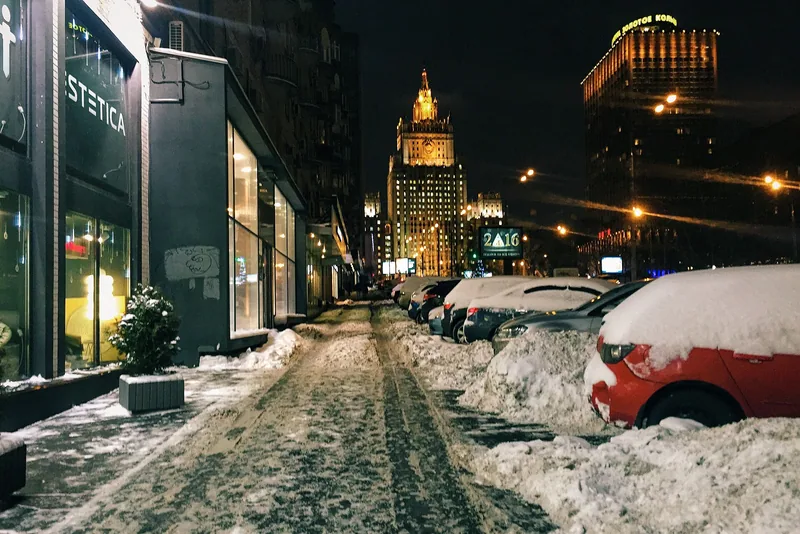
A first winter in a big Russian city may surprise you less with the frost than with the details: short days, slippery pavements, icicles on the eaves and a different rhythm of public transport during snowfall. The good news is that you can prepare for all of this calmly and in advance. Much of what locals do without thinking a newcomer has to learn from scratch.
We have gathered general advice based on safety leaflets from Russia's Emergencies Ministry (MChS) and weather-service data. Climate varies greatly between cities, so follow the forecast and your city's announcements, and treat this text as a starting point rather than a rulebook for every case. When in doubt, ask neighbours or colleagues: local tips on where it gets slippery and how to get around in snow are often the most useful.
Layers and warm footwear
The MChS leaflet suggests dressing like a cabbage: air stays trapped between the layers and holds in warmth. Clothes should not restrict movement, so that circulation is not impaired, and the outer layer is best waterproof. Layers are handy in the city too: the metro and shops are warm, and it is easy to take something off. A hat, scarf and mittens protect the parts of the body that get cold fastest, so do not skip them even on a short trip.
A similar rule applies to shoes. Tight footwear and missing insoles, rescuers say, are frequent causes of chafing and frostbite. Choose shoes slightly roomier, with a warm insole, and wear wool socks rather than cotton. Alcohol does not warm you; it only creates a false sense of warmth. For slippery pavements choose soles with good grip, and in severe frost it is best not to linger outdoors without need.
Short days and warmth indoors
Winter days are much shorter. In Moscow, average daylight in December is about 7 hours compared with about 17 in June, and the whole of December averages fewer than twenty hours of sunshine. The further north the city, the shorter the day. Plan walks and errands for daylight hours and wear reflective elements on your clothing. Many newcomers notice that short days affect their mood, so try to get outside during daylight.
Radiators in apartment blocks are not switched on by the calendar. Under the general rules, heating must start no later than the day after a five-day period in which the average daily temperature stays below +8 °C, while the actual dates are set by local authorities. Watch for announcements on your city portal or from your building's management company. In the first days of the season radiators may warm up unevenly; if your home is cold, contact the management company.
Ice and icicles
MChS advises moving carefully on ice, placing the whole sole down, with your legs slightly relaxed and your hands free; keeping them in your pockets is dangerous. If you slip, crouch at once to reduce the height of the fall. On stairs, place your foot along the step. If you are hurt, do not treat yourself; see a doctor straight away. Do not hurry at crossings and at the entrances to metro stations and shops, where heavy foot traffic often packs ice especially hard.
In winter icicles often form on roofs, so rescuers advise against walking right alongside the walls of buildings. Keep to the middle of the pavement, pay attention to barriers and warning tape near buildings, and do not linger under eaves and drainpipes. After a thaw followed by a fresh frost the risk increases, so be especially careful on such days.
Weather warnings and transport
The Hydrometcentre of Russia publishes warning maps with colour levels: yellow means potentially dangerous weather, orange dangerous, and red very dangerous. Warnings about heavy snow, wind and frost are also issued by regional MChS offices. Check them in the evening when planning the next day. Orange and red levels are a reason to postpone non-essential trips and plan your route in advance.
In snowfall, allow extra time for your journey. Ice forms near stops and traffic lights from frequent braking, and on snow a car's braking distance, according to MChS, increases almost threefold, so do not dash across the road in front of traffic. Look for changes to city transport on the carriers' official websites and apps. In heavy snow the metro and suburban trains are often the most predictable option, though it is still worth watching for announcements.
Sources & context
- EMERCOM of Russia, Orenburg Region — Preventing hypothermia and frostbite
- EMERCOM of Russia, Udmurtia — Beware of ice: advice for pedestrians and drivers
- Hydrometcentre of Russia — Weather warning map (Central Federal District)
- GARANT.RU — Start of the heating season: legislation
- Wikipedia — Climate of Moscow
A russia.direct editorial selection based on open sources. Checked 30 September 2026. Practical suggestions are a decision guide, not a promise of outcomes.
Editorial principles